Getting around, and what it costs
Checked September 2026
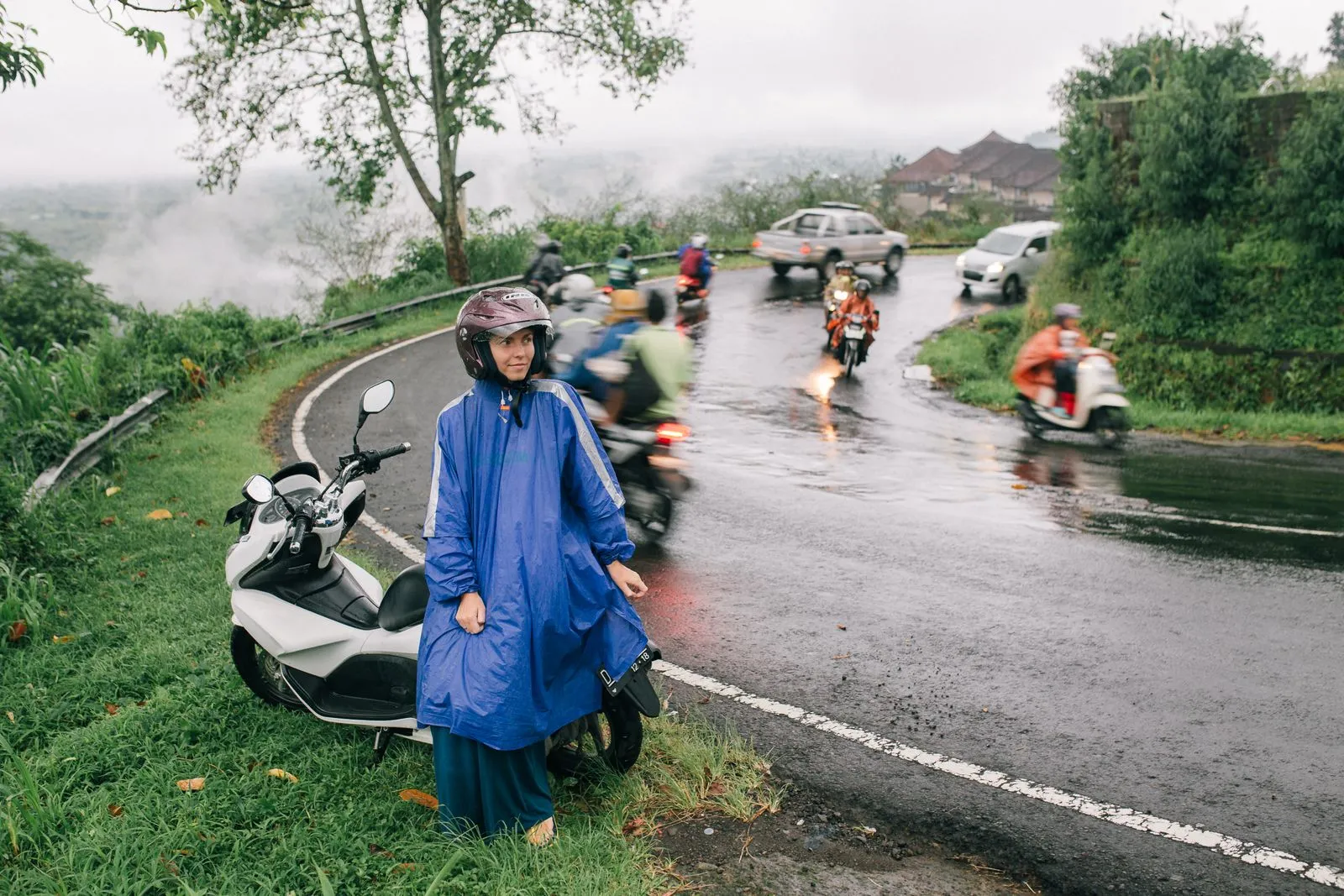
Scooters: the licence, the rental, the risk
You need two documents, not one. Your home licence must itself carry motorcycle entitlement, and your International Driving Permit must carry the motorcycle category. Indonesia uses the 1949 Geneva Convention booklet, and a car-only IDP does not cover a scooter. The UK Foreign Office is blunt: you cannot drive here on a home licence alone, and Bali’s own 2025 circular for foreign visitors requires the same plus a helmet. Statutory figures, not roadside practice: no licence carries up to four months or IDR 1,000,000 under Indonesia’s traffic law, no helmet up to IDR 250,000, with the rider liable for a bare-headed passenger.
Never leave your physical passport as a deposit; decent firms photograph it. The helmet supplied is often the wrong size and not the SNI standard the law asks for, which matters: insurers refuse motorbike claims where the rider had no helmet or the wrong IDP category.
Whether to ride at all is the harder question. The Foreign Office says traffic discipline in Indonesia is very poor and motorbike accidents in Bali, some fatal, have risen sharply. Rain makes painted markings slippery. Canggu to Ubud is not a beginner route, the hill roads around Munduk and Kintamani sit in mist, and on Nusa Penida the roads are part gravel and scooter crashes are the commonest visitor injury. If you have not ridden at home, do not learn here.
Police stops: what visitors report
This is what riders describe, not official procedure. A proper stop means the officer explains the violation and writes a ticket: a blue slip if you admit it and pay at a bank, a pink slip to contest it in court a week or so later. Riders also report informal roadside settlements of around IDR 250,000. We cannot confirm that.
One case is documented: in March 2026 near Kerobokan, officers asked a foreign couple for IDR 750,000 across two violations, and the police chief confirmed the legal total and apologised. Checkpoints cluster around Kuta, Seminyak, Canggu and Ubud; carry a passport copy, your licence, the IDP and the rental papers.
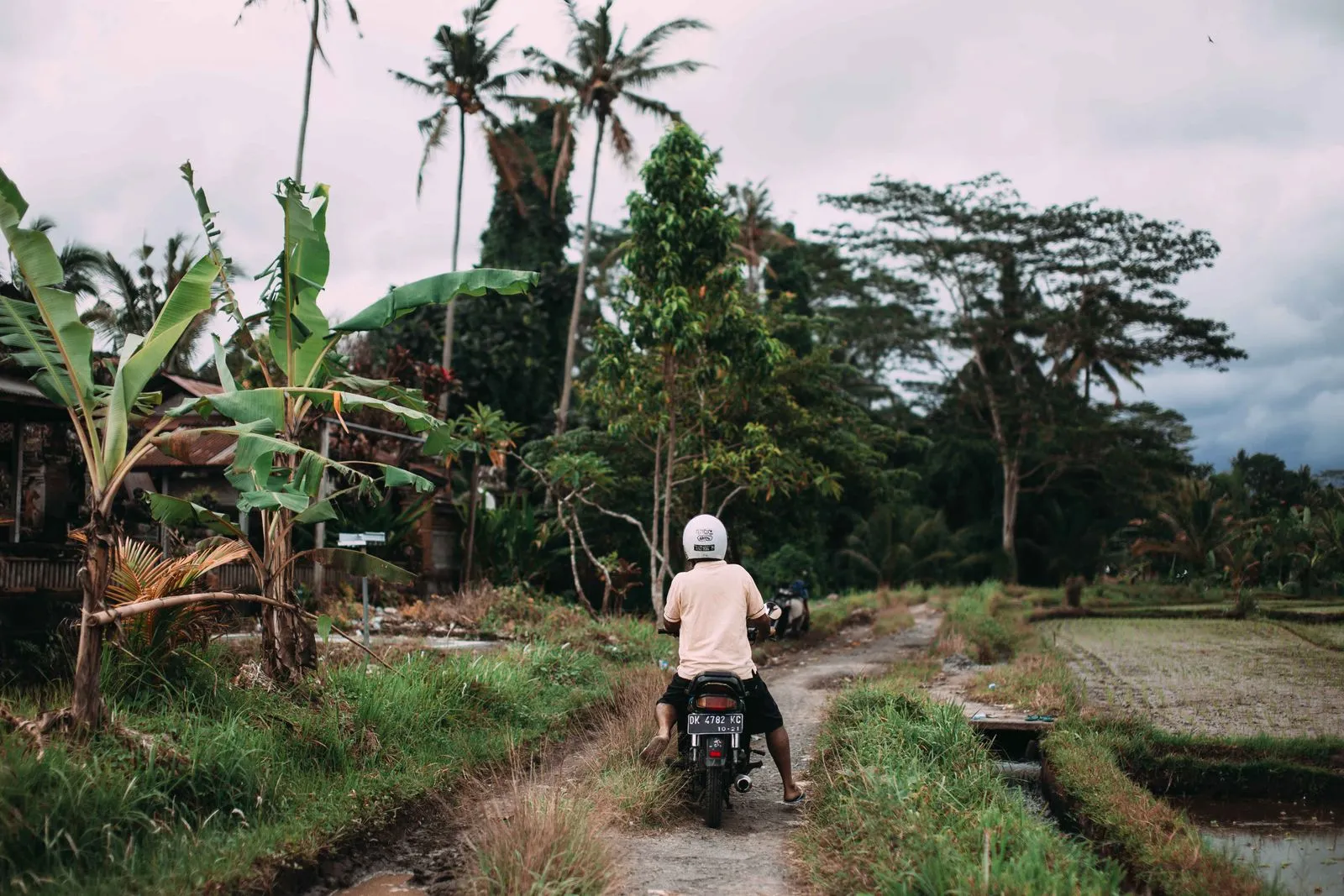
Drivers, the apps, and where they are not welcome
A car with a driver comes by the ten-hour day, with about IDR 100,000 an hour beyond that. Tickets, parking and the driver’s lunch sit outside the rate.
Grab and Gojek are cheap and not universal. Pickups are blocked by local transport groups in central Ubud, on the Bukit around Uluwatu and in parts of Canggu; drop-offs are fine, getting out again is the problem. There is none at Tegallalang or Jatiluwih. Tipping is not expected; bills usually add service plus 11 per cent tax.
| What | Typical cost |
|---|---|
| Scooter, basic automatic, per day | IDR 80,000–150,000 (about €4–8) |
| App bike, app car, 1–5 km | IDR 15,000–35,000, IDR 50,000–120,000 |
| Airport to Canggu, to Ubud | IDR 150,000–250,000, IDR 200,000–450,000 |
| Car and driver, ten-hour day | IDR 650,000–900,000 (about €35–50) |
Drive times that are nothing like the map
Canggu to Ubud is 30 to 35 kilometres. From 06:00 to 07:30 that is 50 to 60 minutes. By midday it is 75 to 95. From 16:30 to 19:30 it is 100 to 130 on the same road.
Canggu to Uluwatu is a similar distance and worse: an hour and a quarter before 08:00, two and a half to three hours from 15:00. For the sunset kecak, do not leave after about 14:30. The bad windows are Canggu 16:00 to 19:30, Seminyak and Kuta 12:00 to 19:00, Ubud 11:30 to 18:30.
Further out, distance matters again: Ubud to Amed is 76 kilometres and two and a half hours. The airport to Sanur is 14 kilometres, 30 to 45 minutes on the toll road and an hour when it is bad; Sanur’s own crush is 07:00 to 09:00, when the island boats leave.
Cash, cards and the counting
Carry more cash than feels sensible. The largest note is IDR 100,000, about €5.50, and gates at terraces and waterfalls are frequently cash only. Machines cap at about IDR 2 to 2.5 million a withdrawal, your bank adds a few euros, and on the Nusa islands the machine adds IDR 25,000–50,000. Use ATMs inside bank branches, and ignore helpline stickers: the Foreign Office warns those are sometimes fake.
Change money only at a licensed changer with Bank Indonesia authorisation and its QR code displayed, which the circular makes an instruction to visitors, along with paying in rupiah. The trick is not the rate, it is the count: a rate well above everyone else’s, notes counted fast and then folded, one or two palmed on the fold, a counting machine that breaks. Count it yourself and refuse pre-counted bundles. Many merchants add 2–3 per cent for cards; if a terminal offers to charge you in euros, decline and pay rupiah.
The levy, and the fees you will actually meet
The tourist levy is IDR 150,000 per foreign visitor, about €8, once per trip. Pay it on the official provincial portal or the Love Bali app before you fly and keep the QR voucher on your phone; only the government domain is genuine. There is a desk in the arrival hall too, though sources disagree on whether it takes cash. It is checked unevenly: officers in vests spot-check at the bigger sites, Tanah Lot, Uluwatu and Besakih most consistently, and without a voucher you pay on the spot.
| Fee | Foreign adult | Note |
|---|---|---|
| Tourist levy | IDR 150,000 | once per trip |
| Uluwatu Temple | IDR 60,000 | kecak IDR 150,000 extra |
| Tanah Lot, Tirta Empul | IDR 75,000 | |
| Ubud Monkey Forest | IDR 130,000 | |
| Tegallalang | IDR 15,000–25,000 | cash only |
| Jatiluwih | IDR 40,000–100,000 | sources disagree |
| Waterfalls | IDR 10,000–50,000 | Sekumpul treks reach 250,000 |
| Nusa islands zone levy | IDR 25,000 adult, 15,000 child | on entering the zone, not the national levy |
| Nusa Penida, each attraction | IDR 25,000 adult, 15,000 child | on top of the zone levy |
Parking adds IDR 3,000–10,000. The Nusa islands charge twice, which most guides online still get wrong: a zone levy when you enter the Nusa Penida and Lembongan tourism area, and then the same again at each attraction you visit. Collection started in September 2026 under a Klungkung regulation, it is in force rather than suspended, and a three-stop day on Penida therefore costs about IDR 100,000 a head before the national levy. The Mount Batur trek is a package, from about IDR 450,000 shared to past IDR 1,500,000 private for two, with a compulsory guide enforced by the guides’ association rather than any law we found.
Water, stomachs and the bill you cannot pay
Tap water is not safe to drink. Factory tube ice, the hollow cylinders with a hole through them, is purified water; crushed ice at street carts is what catches people.
When the stomach goes, rehydration salts matter more than tablets. Loperamide treats the symptom but not with blood or fever, mild cases need no antibiotics, and a doctor is for blood, fever, or no improvement after a day. We have no reliable source on what a Balinese pharmacy hands over without a prescription, so bring your own sachets.
Rabies is present. Dog and monkey bites run into tens of thousands a year, with deaths every year. If anything breaks the skin, wash it under running water with soap for fifteen minutes and get to a clinic the same day.
Insurance is the one thing not to economise on. The Foreign Office says local care can be poor, some tests unreliable, and evacuation can cost tens of thousands of pounds; private hospitals expect payment or direct billing upfront. Check that your policy names evacuation and repatriation, and read the motorbike clause before you rent.
Rain, and what it does to a day
The wet season runs roughly November to March, heaviest December to February, with 250 to 350 millimetres a month in the south. The pattern is a clear morning, cloud building, a short violent downpour later. The east sits in Agung’s rain shadow; the northern highlands get the most, which is where the views are.
Rain costs you the afternoon. Terrace paths turn to mud, waterfall trails go slick and close after flash floods, cloud sits on Batur, and boats to the Nusa islands are delayed or cancelled, worst in January. Do the outdoor half of the day first.
What it comes to
The fixed costs are small: the levy, a day of fees and parking, and a scooter or a driver. What is expensive is the wrong hour on the wrong road, and a hospital bill you have not insured. None of these fees are stable. The places are on the map; the prices are the part we cannot promise.
Tours and tickets in Bali
Booked through GetYourGuide, who choose what appears here and pay us a commission if you book. These are not our picks and we have not checked them — our own recommendations are the places on the map. How this works