The journeyTrip 3
Checking our own work
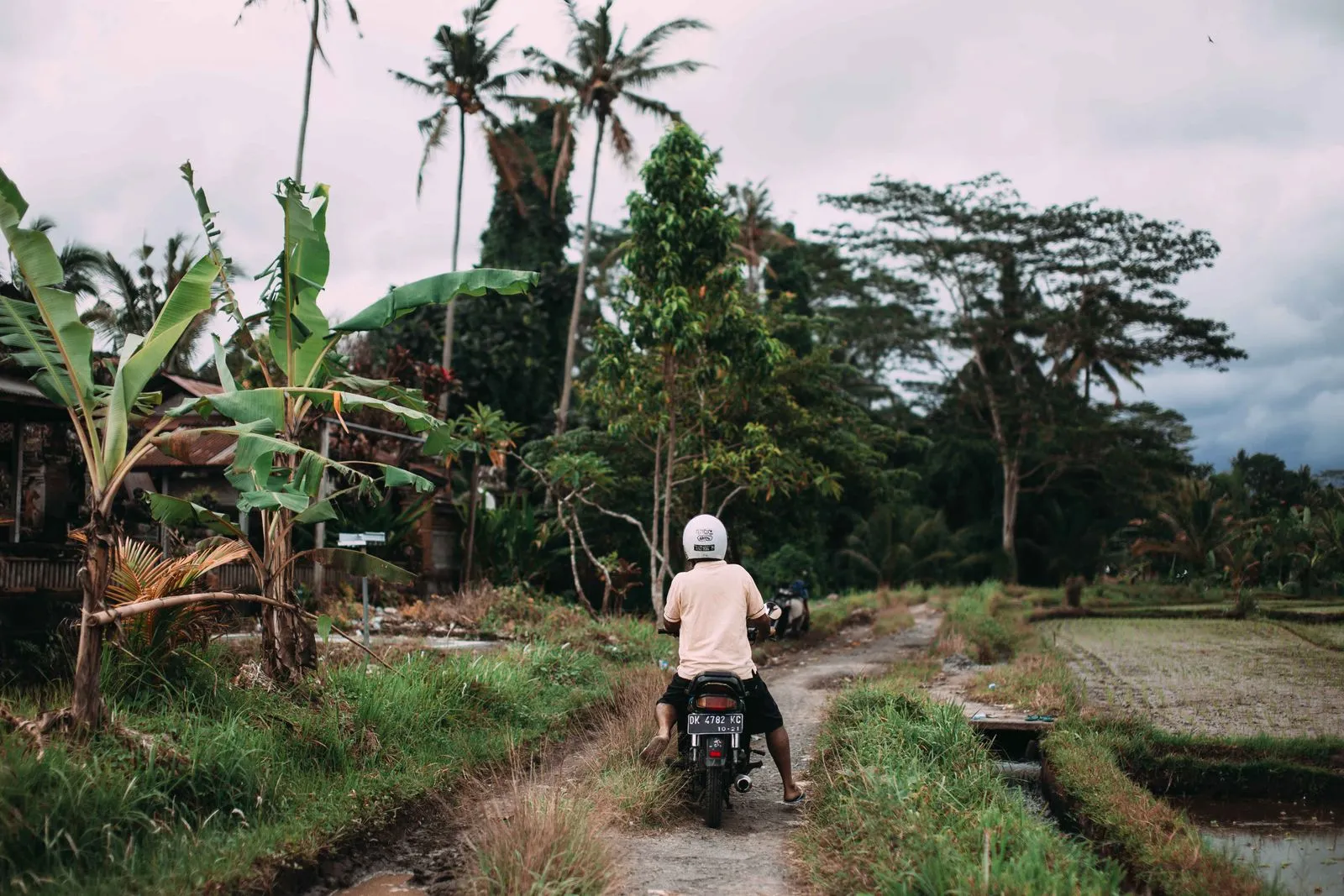
A check is not a visit
A first visit takes an afternoon. A check takes about ten minutes. That difference is the whole shape of our third trip: two hundred and fifty places and nothing left to discover. Everything on the map had already been found on the first two trips. The job this time was to go back to each one and see whether it was still what we had said it was.
Several a day, every day, for weeks, and that is only the arithmetic. It ignores the drives, the boat days, the mornings lost to rain and the places that are worth nothing at the wrong hour.
It is not the good trip. It is bookkeeping with a scooter.
What a check actually asks
Four questions, in order. Is it still there. Is it open at the hour we wrote down. Is the price on our note the price on the board. Has it changed hands, or changed the one thing that made it worth the ride.
Closing is the easiest to see: a shutter, a new name over the door, a building site. That needs no judgement. Those came off the map.
The harder ones are still trading. A cafe that has doubled its prices and halved its opening hours is not the place we wrote up. A warung that has been discovered, put into three listicles and now has a queue at eleven in the morning is a different recommendation, even if the food is identical. A viewpoint with a new ticket booth in front of it needs its number changed, not its entry deleted.
So a check produces three outcomes, not two: unchanged, amended, removed. Most of the work is the middle one.
Why it takes weeks and not days
Geography does most of it. Canggu and Ubud can be checked in chains — park once, walk, cross a lane, check the next. The rest of the island cannot. Ubud to Amed is about 76 km and roughly two and a half hours; Ubud to Munduk is two to two and a half, and Sekumpul anywhere from under two to three, depending on who is selling you the trip. Each of those is a day for a handful of entries.
Then the traffic. Around Canggu the jam runs roughly 16:00 to 19:30, and the Canggu to Ubud run that takes 50-60 minutes early in the morning takes 100-130 minutes at six in the evening. Leave at the wrong hour and you have spent your checking time sitting still.
Then the cost of moving. A basic automatic scooter is about IDR 80,000-150,000 a day, and you need your home licence with a motorcycle entitlement plus an International Driving Permit; without it an insurance claim can be refused. A driver for a ten-hour day is roughly IDR 650,000-900,000, with tickets, parking and tolls on top. For somewhere like Jatiluwih there is no ride-hailing at all, so a driver is not optional.
The weather writes the timetable
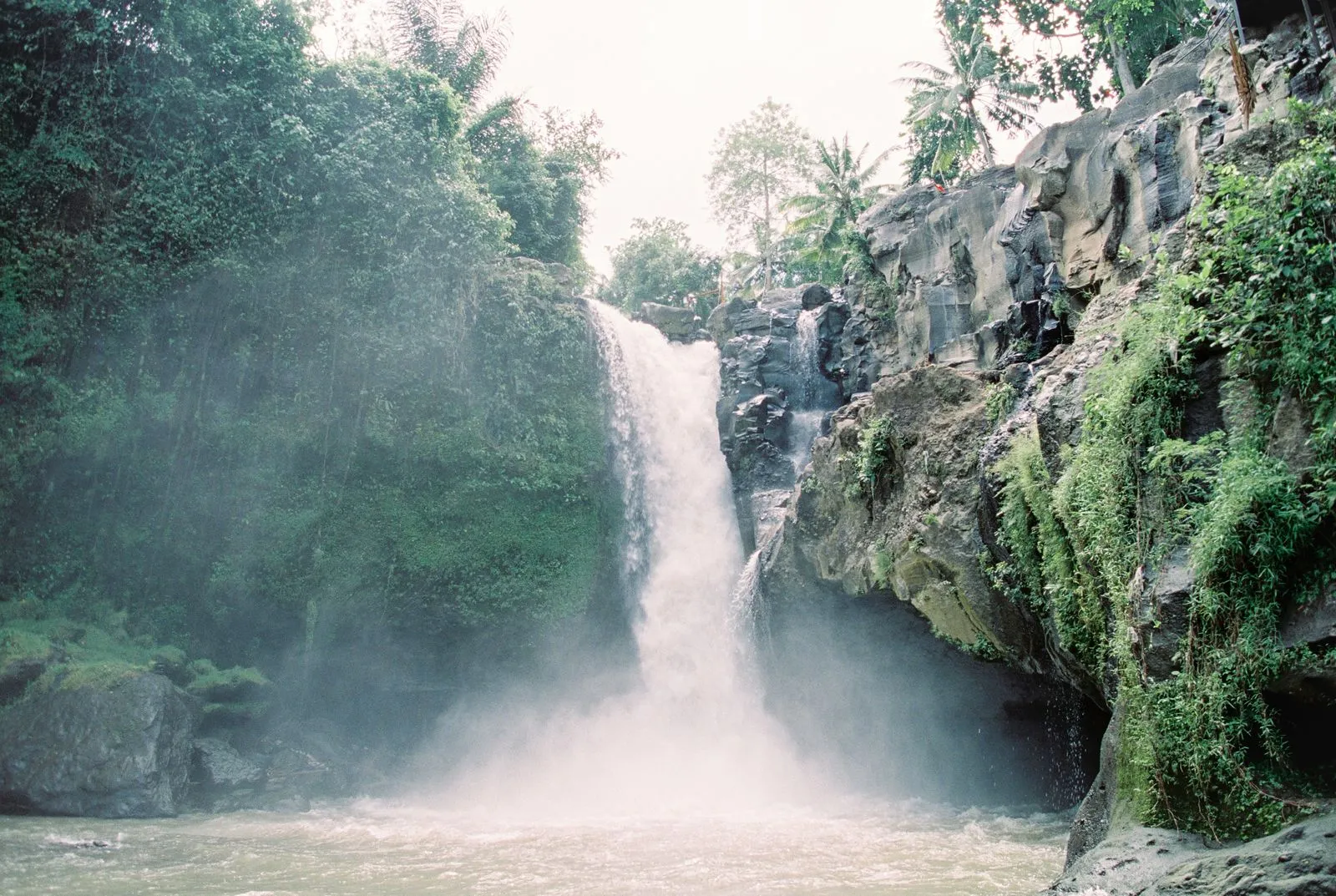
In the wet months Bali gets something like 280-350 mm of rain and twenty or more rainy days, and the highlands get more than the coast. What matters is not the total but the shape of the day: mornings are often clear, cloud builds, and the heavy rain arrives in the afternoon or evening.
For a checking schedule that is brutal. Everything outdoors — waterfalls, terraces, rim viewpoints, boats — has to happen before lunch, and the indoor entries fill the wet half of the day. Trails turn to slick mud, the highland viewpoints sit inside cloud, and waterfalls that run strongest in the rain also carry flash-flood warnings.
It also changes what an honest entry says. A place we would send you to in the dry season is sometimes one we would tell you to skip in the wet, and that is an amendment, not a deletion.
The crossing you cannot schedule around
Sanur to Nusa Lembongan is about 15 km and about 30 minutes in good conditions, up to 45 in a poor sea. First departures are around 07:00-07:30, the last around 17:00, and check-in is 30-60 minutes before, though one operator asks for far longer. Most boats load off the beach at both ends, so you wade.
Published one-way fares run from about IDR 100,000 with the budget operators to about IDR 560,000 with the premium ones. We would not plan against a single figure, and we do not publish one.
The real risk is not the price. In the wet months swells of 1-2 metres are not unusual and crossings get delayed or cancelled. It is not only a wet-season problem either: one day of high waves took out something like 80-90 sailings from Sanur, in the dry season. If an island is on your route, put it early, so a lost day has somewhere to go.
The islands now charge per thing you look at
First the island-wide tourist levy: IDR 150,000 per foreign visitor, once per visit, paid on the official Love Bali portal before you fly. Only the .go.id address is genuine; lookalike sites charge more. Officers do spot-check the QR voucher at the bigger sites, so keep it on your phone.
Then the Nusa islands add their own zone levy, around IDR 25,000 per adult and IDR 15,000 per child, charged on entering the islands.
And then the new one, on top of that. Nusa Penida charges again at each attraction — roughly IDR 25,000 adult and IDR 15,000 child at each of a list of named sites. Collection started in September 2026 under a Klungkung regulation, after one postponement, and it is in force whatever the older guides still say. So a three-stop day is about IDR 100,000 a head before the national levy, and an itinerary priced last year is wrong by the cost of a meal per person. That is exactly how a map goes stale without anyone closing anything.
Batur: a price we will not pin down
The Mount Batur sunrise trek is the clearest example of why we give ranges instead of numbers. Published prices run from about IDR 450,000 for a join-in group with breakfast and transfers, through a general IDR 300,000-850,000 band, up to IDR 1,000,000-1,500,000 for a private trek for two. Quoted components suggest a permit around IDR 100,000 and a guide fee of IDR 300,000-600,000 per group. Anyone who tells you the price is one number is telling you theirs.
The guide is not optional. A registered local guide is compulsory, enforced by the guides’ association at checkpoints near the base, at roughly one guide per four trekkers; solo walkers are turned back or made to hire on the spot. Some write-ups call it a monopoly in practice. We found no government page stating it as law, so treat it as customary and budget for it.
The timings are set by the sunrise: pickup around 01:00-02:30, walking from about 03:30-04:00, summit for roughly 05:45-06:15. In the wet months cloud is the real gamble, and some sources say an attempt can be difficult or simply not happen.
Some entries carry an hour, not just an address
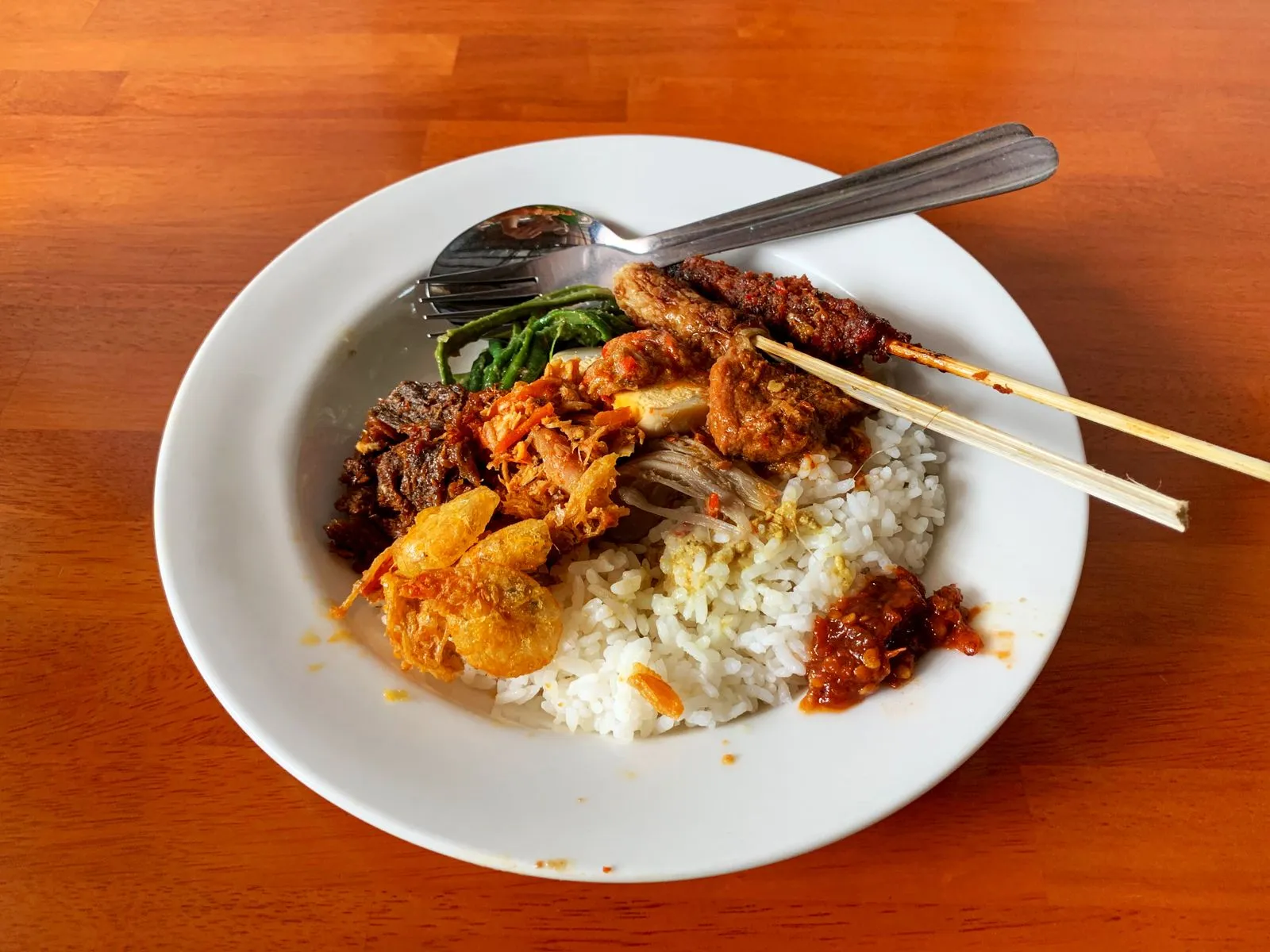
A checking trip makes you notice how many places are only worth it inside a narrow window.
The rice terraces north of Ubud fill when the buses arrive after ten; the useful hours are roughly 06:00-08:30 and again late afternoon. Tirta Empul is heaviest 10:00-14:00, so go before ten or after four. Tegenungan is best before eight. On the Kintamani rim, be there by 08:30-09:00, because the fog tends to come up the valley around 10:30-11:30. Kelingking on Penida is worst 11:00-15:00.
A few work the other way. Devil’s Tears on Lembongan wants high tide for the big sprays and the half-hour before sunset for the photographs, and costs about IDR 25,000 in cash. An entry without an hour attached to it is half an entry.
How a map goes stale
A map built on one trip is accurate on the day the trip ends and starts decaying immediately: prices rise, opening hours contract, a village adds a gate, a good place gets popular and stops being good. None of that shows up in an old photograph or an old review. It only shows up if somebody goes back and stands in the doorway.
So what we can honestly claim is narrow. We went, we went back, and when we went back we amended what had changed and removed what had gone. We cannot claim the version you download will still be right in a year — only that it was checked, on foot, by the people who wrote it. The map is worth exactly that much, and no more.
Tours and tickets in Bali
Booked through GetYourGuide, who choose what appears here and pay us a commission if you book. These are not our picks and we have not checked them — our own recommendations are the places on the map. How this works