The journeyTrip 2
East, and slower
27 days
Twenty-seven days, and far fewer places
Our second trip ran twenty-seven days, December into January. The record of it lists 59 places and about 136 hours spent in them. That second number is the point of this post.
The first trip had been a list to get through. This one was a handful of bases and a habit of not booking more than a day or two ahead. The time went to Ubud and its villages, the Bangli hills and the roads east, Kintamani around Lake Batur, four days on Nusa Lembongan with a day across to Nusa Penida, and then a long stretch in Canggu.
Some of those days were not in Bali at all. We took a break on Gili Trawangan, which is another island in another province and is not on the map we sell.
Moving base every two days is worse than it sounds
A two-night stay does not cost you two nights. It costs you a morning, and in the wet season the morning is the only part of the day you can rely on.
Canggu to Ubud is 30 to 35 km. Between 6:00 and 7:30 that is 50 to 60 minutes. Between 10:00 and 13:30 it is 75 to 95 minutes. Between 16:30 and 19:30 it is 100 to 130 minutes on the same road. Ubud has its own bad window, roughly 11:30 to 18:30.
A private driver for a ten-hour day, with car and fuel, runs about IDR 650,000 to 900,000, plus roughly IDR 100,000 an hour of overtime, with tickets, parking and tolls outside that. Spend one of those days relocating and you have paid a full day rate to sit in a car with your bags.
Ubud, and the value of sitting still
The clearest thing in our own record is how long we stopped. One café in Ubud has five and a half hours against it. One viewpoint has nearly three. One beach has four. On a trip built around a checklist, none of those happen.
The villages north and east of Ubud are where that pays off. They are lanes, paddies and family compounds rather than attractions, and you can be in them before anyone has left their hotel.
We gave an hour and a half to Tibumana, the waterfall in Bangli that most Ubud itineraries treat as a thirty-minute stop. Entry is around IDR 20,000 to 25,000, cash only, and sources split on whether parking is free. It opens about 07:00, sits 30 to 40 minutes from Ubud, and takes roughly twelve minutes to walk down on stairs, dirt and bamboo bridges. Crowds build before lunch, so 08:00 to 10:00 is the window. You can swim, but stay out from under the fall.
Bangli, and the road that goes to Sidemen
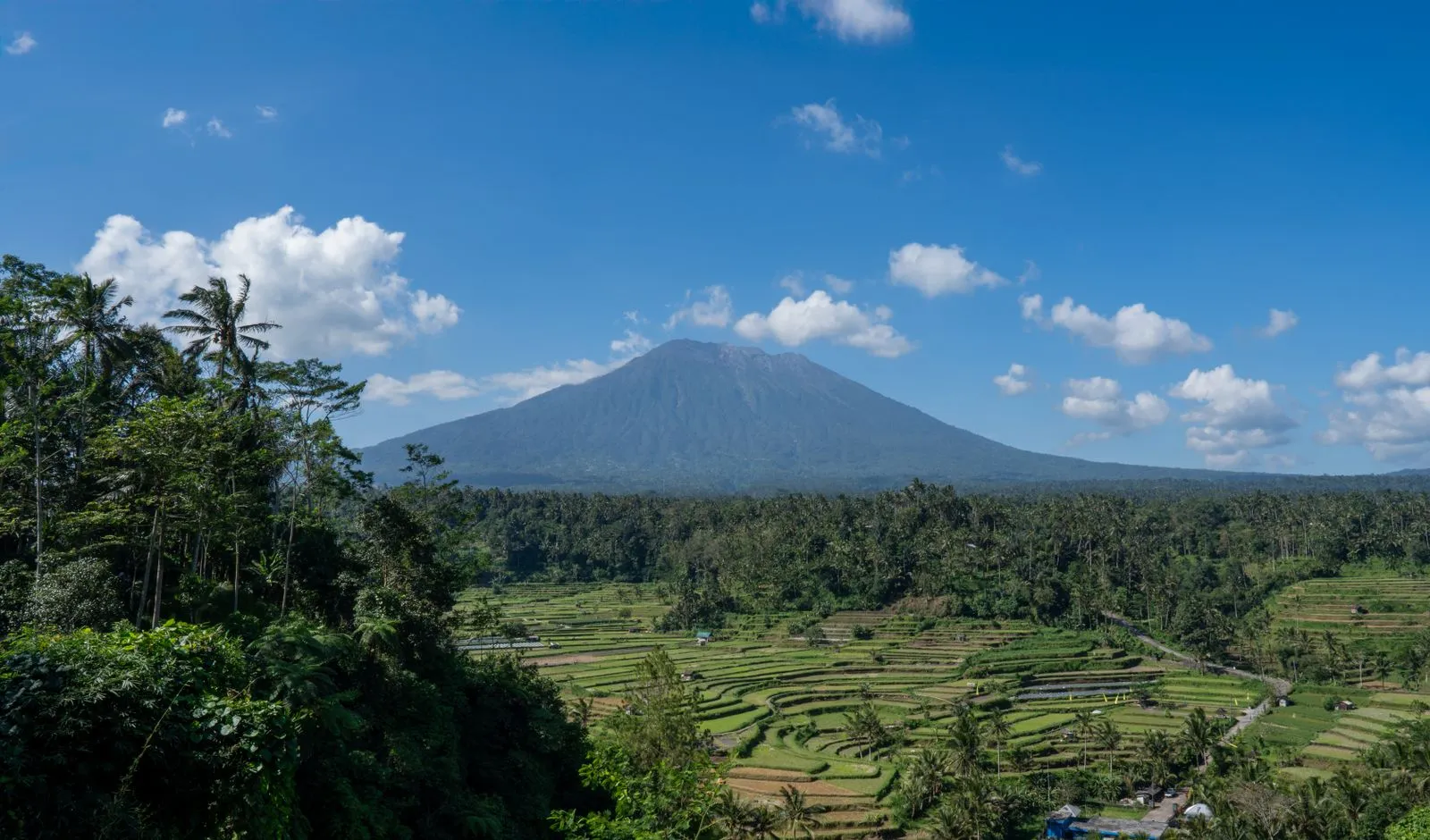
Sidemen is rice terraces under Mount Agung, weaving and silver workshops, and roads with nothing on them, about an hour and a half from Ubud (37 km) and two hours from the airport.
Two honest points. The mountain is a dry-season promise: sources put the clear months around April to June and September, so in December do not plan around seeing Agung. And the roads are steep, winding and slippery after rain, which in that season is most afternoons. A hand-woven sarong takes about a month to make and runs to around IDR 2,000,000. That is a craft price, not a souvenir price.
What we did put time into, about forty minutes of it, was the old village at Penglipuran, over in Bangli. It is one of the sites where officers ask to see the Love Bali levy voucher. The levy is IDR 150,000 per foreign visitor, once per visit, paid on the official provincial portal. Anything charged above that, by anyone, is a red flag.
Kintamani, in the wettest part of the year
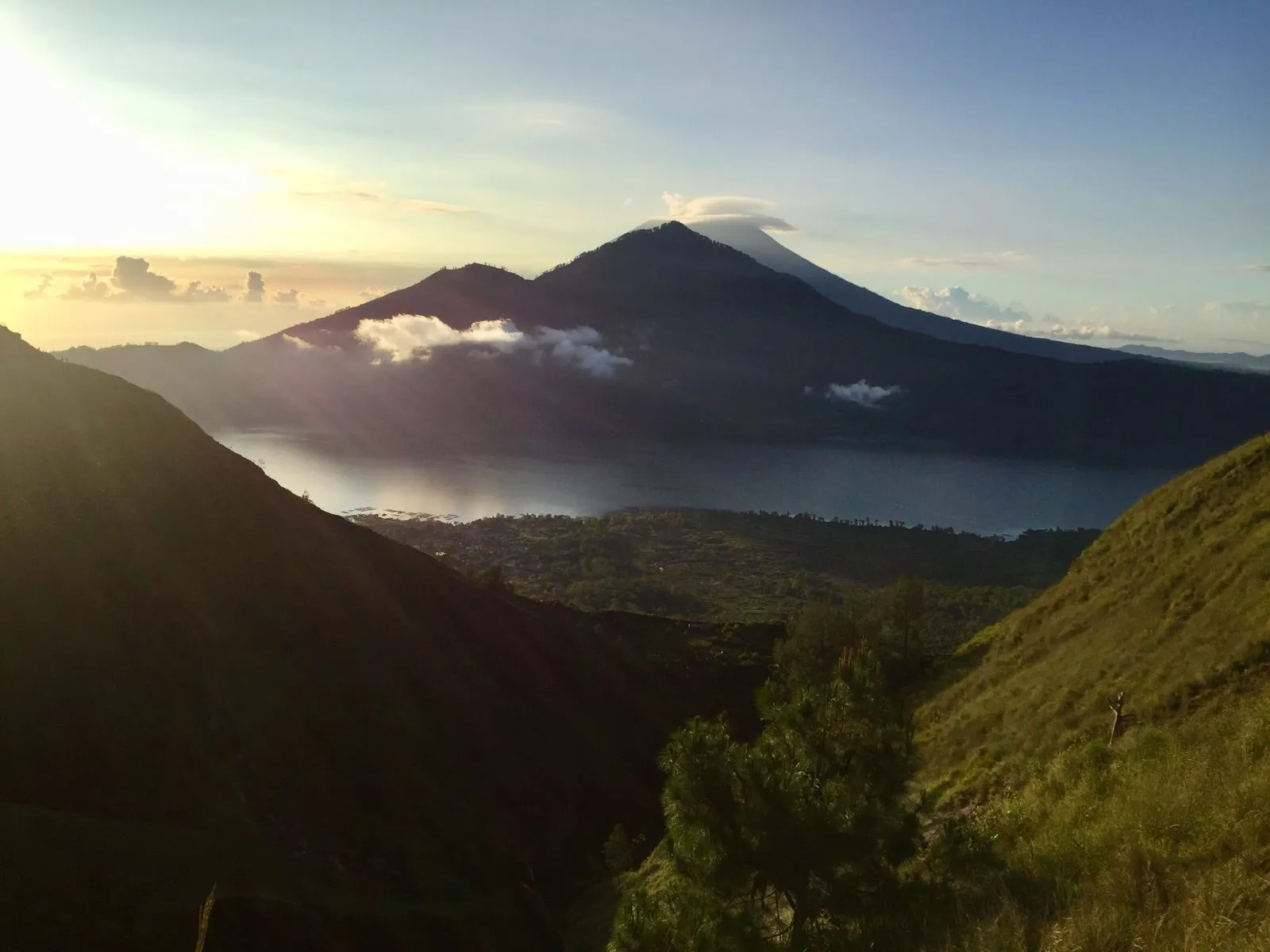
Kintamani is the caldera rim, with the volcano, the lake and the old lava fields in one view. It is cold by Bali standards, 15 to 22 C by day and about 12 C at night, and roughly an hour from Ubud.
Timing beats everything else here. Be on the rim by 08:30 or 09:00, because the fog comes up the valley around 10:30 to 11:30 and the view simply stops. We have a little over two hours logged at one place up there, which is about as long as that view lasts.
A roadside booth collects a regency highland fee, quoted at about IDR 50,000 a head plus parking, though only one source gives it. Carry cash: the guides warn about persistent sellers at the main viewpoint, poor-value buffets and reports of fraudulent card charges.
We did not do the sunrise trek. A registered guide is compulsory and enforced at the trailhead, pickup is around 01:00 to 02:30, and quoted prices run from about IDR 450,000 in a shared group to well over 1,500,000 private. In December and January, cloud and rain make it unreliable and sometimes impossible.
Where we had not got to
We did not reach Amed or Munduk. Both were on the list and both stayed there.
Distance is most of the reason a loose plan keeps pushing them back. Ubud to Amed is about 76 km and two and a half hours. Ubud to Munduk is two to two and a half hours. Either is a relocation, not a day trip, and we had stopped relocating.
The season argues differently about the two. Munduk and the highlands behind it take 300 to 400 mm of rain a month in that window, with mist and trails that turn to slide. Amed sits in Agung’s rain shadow at 80 to 150 mm, one of the driest corners of the island, though January rain still cuts snorkelling visibility back to the sheltered bays.
The crossing, and four days on Lembongan
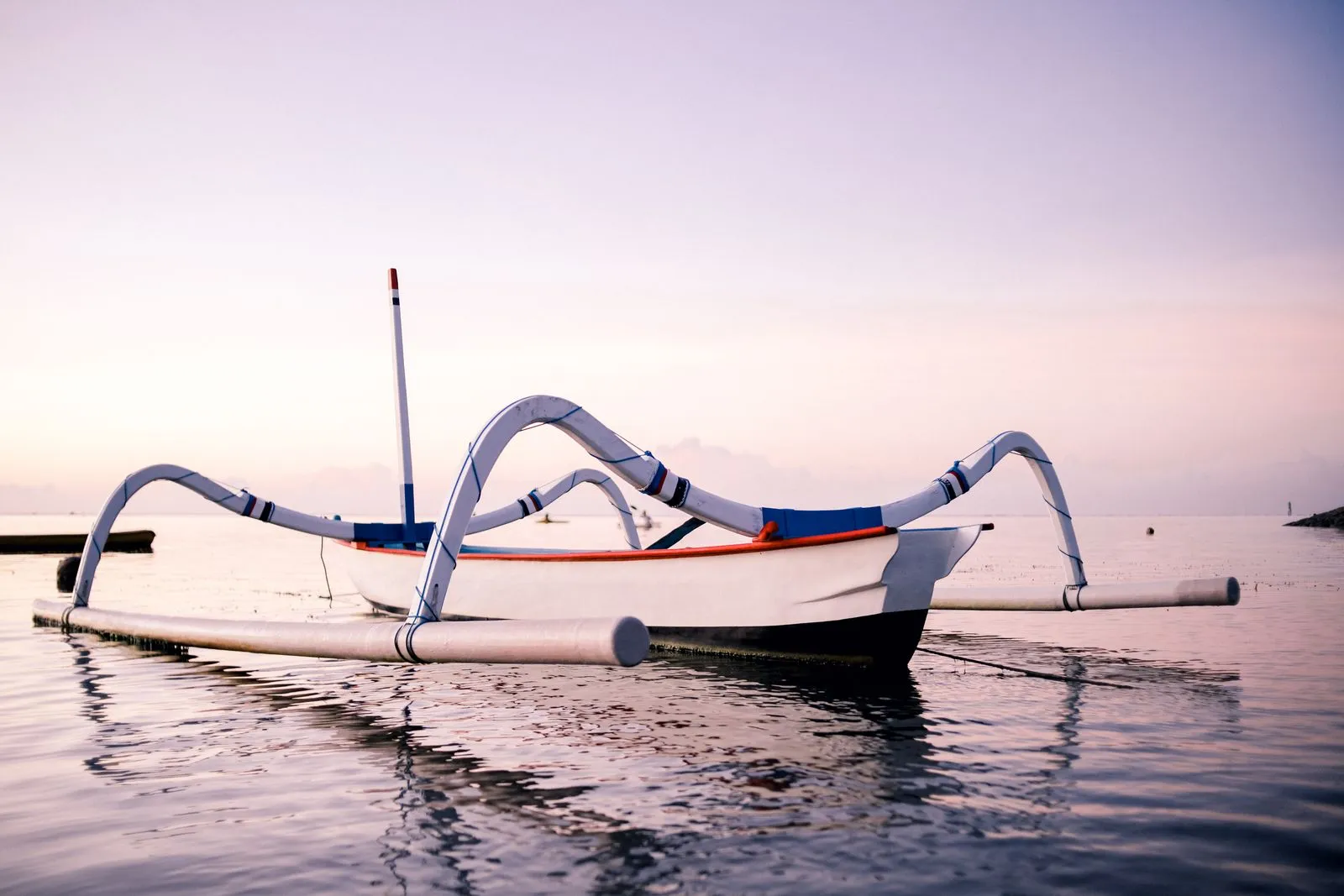
The boat from Sanur is about 15 km across the Badung Strait and takes around 30 minutes, up to 45 in a poor sea.
Do not trust a single fare. Budget operators are quoted around IDR 100,000 to 175,000 one way, and one operator’s own fares page lists 300,000 one way and 450,000 return, boat only. The top of the published range is close to IDR 560,000, and season, operator and whether a hotel transfer is bundled explain most of the spread. Foreigners also pay an island retribution of IDR 25,000 for an adult and 15,000 for a child aged 4 to 13.
The practical bits matter more. The harbour road in Sanur jams between 07:00 and 09:00, so a twenty-minute drive becomes an hour. Check-in is 30 to 60 minutes ahead, though one operator asks for an hour and three quarters. Most boats beach-load at both ends, so you wade out ankle to knee deep holding your bag. From November to March swells of one to two metres are not unusual, with January the likeliest month for a cancelled crossing.
Four days is more than most people give Lembongan. One place there holds about sixty-two hours of our record, which is what four days of not going anywhere looks like. We used one of them to cross to Nusa Penida, where the attraction fees have lately become a cashless charge per site and are still being argued about locally.
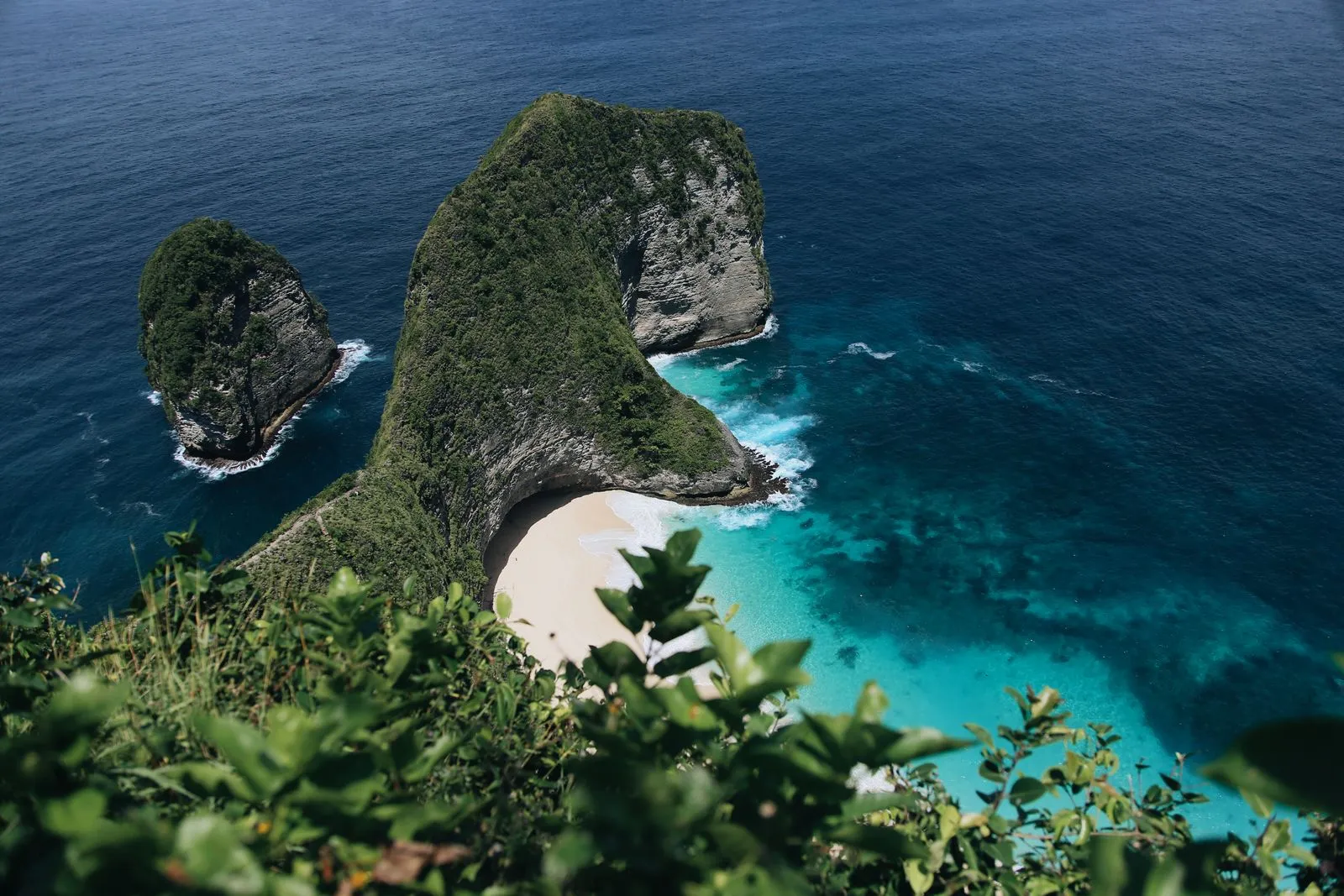
Devil’s Tears is on the west coast, ten minutes from Jungutbatu by scooter, IDR 25,000 in cash and small notes. The blowholes need swell: a high tide gives the big sprays, a low one gives rock pools. Late afternoon draws the crowd; 08:00 to 10:30 is the quiet version. Stay behind the marked line and do not turn your back on the water. People have died there, more than once, and the rock is wet a long way back from the edge.
Where the slow plan broke
Booking a day ahead failed twice, and both are worth saying.
The islands do not work that way in that season. From mid-December to mid-January the boats and the rooms go weeks in advance, and the sea cancels crossings on its own schedule. We would fix the island days early next time and leave the mainland loose.
The second is less flattering. The last stretch was Canggu, and by place count it is the biggest single block in the whole record. A slow trip inland ended on the strip, which is the thing we had said we were avoiding. It is still on the map, because we went.
Tours and tickets in Bali
Booked through GetYourGuide, who choose what appears here and pay us a commission if you book. These are not our picks and we have not checked them — our own recommendations are the places on the map. How this works