The journeyTrip 1
The one we got wrong
19 days
What we booked, and what that cost us
Our first trip ran nineteen days, December into January, at the end of 2024. We took the route almost everyone takes: the strip between Canggu and the airport, a second stretch in Ubud, and the famous sights strung between. Most of it was booked before we left.
The areas were not the mistake. The mistake was using two of them as a base for the whole island, and paying for that in driving. Book the whole stretch in one place and the island comes to you down a road, at whatever speed the traffic allows.
The exception was Nusa Lembongan, the stretch we had planned least. It is the part we would repeat unchanged.
We would book a few nights at a time now and leave the rest open. That is harder over the Christmas and New Year weeks, the busiest of the island’s year, when room prices climb. It would still have saved us most of the hours we spent in a car.
Every famous sight has an hour, and we did not think about ours
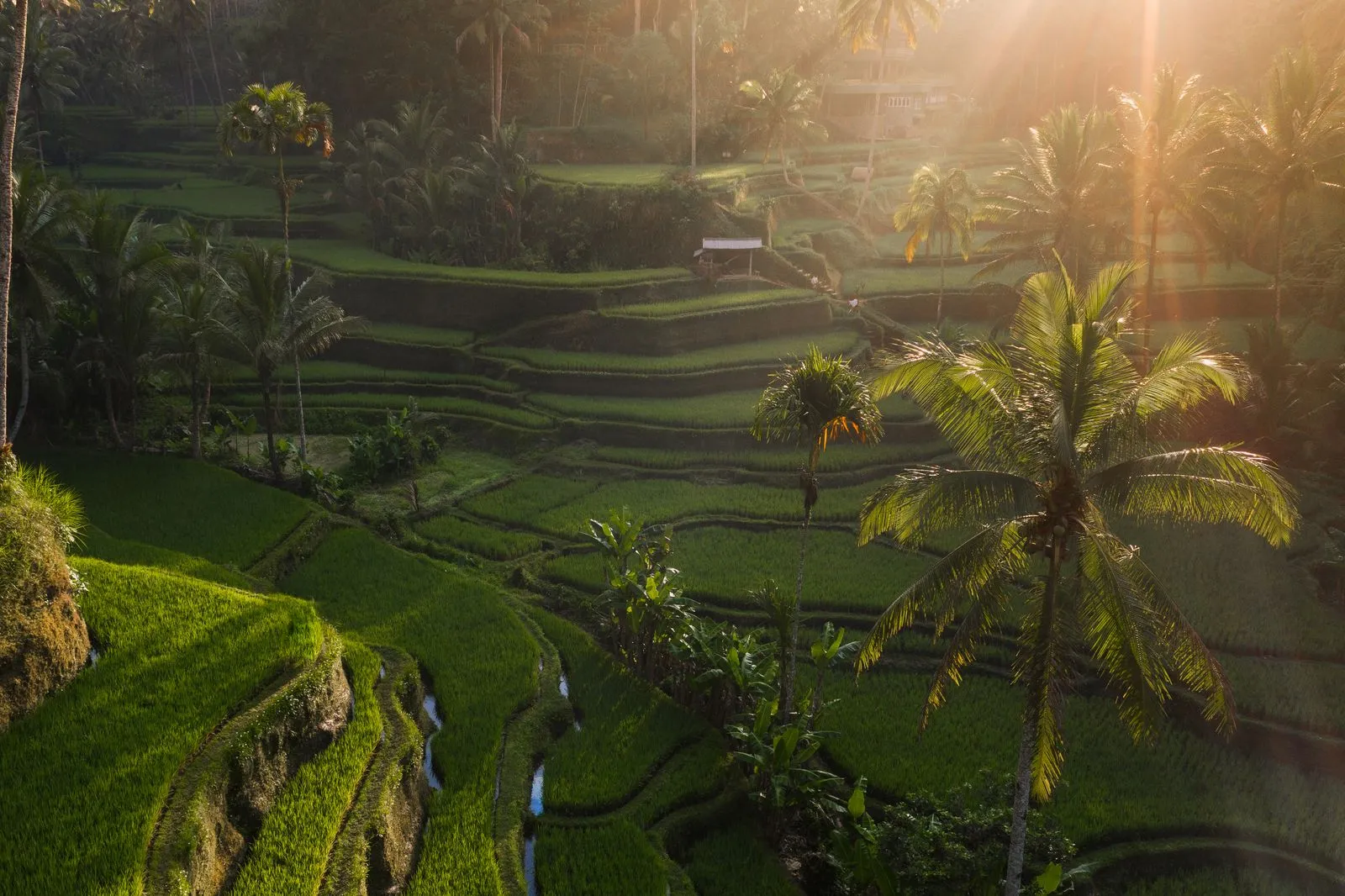
We went to the rice terraces at Tegallalang without once asking what time to arrive, which is the whole mistake in one line. The coaches start after 10:00 and the place stays busy until about 15:00. The gates open at 07:00, and between then and about 08:30 you are mostly looking at people working. It quiets again from roughly 15:30 to 17:30.
Entry is small and cash only — published figures sit between about IDR 15,000 and 25,000 at the time of writing, and vary by entrance. Parking is around IDR 5,000 for a scooter, 10,000 for a car. Donations at the private paths and bamboo bridges are separate, usually IDR 10,000–20,000 each, and they add up. Ride-hailing apps will not pick you up around much of Tegallalang, so how you arrived is how you leave.
Tirta Empul is the same problem in a different building. It runs roughly 08:00 to 18:00, entry about IDR 75,000 for an adult with sarong and sash included, and it is at its worst from 10:00 to 14:00, when the buses and the school groups overlap. Go before 10:00, or after 16:00 when it empties again. Two spouts in the bathing pool are reserved for priests; you skip those.
Tanah Lot, and the coach that arrives at four
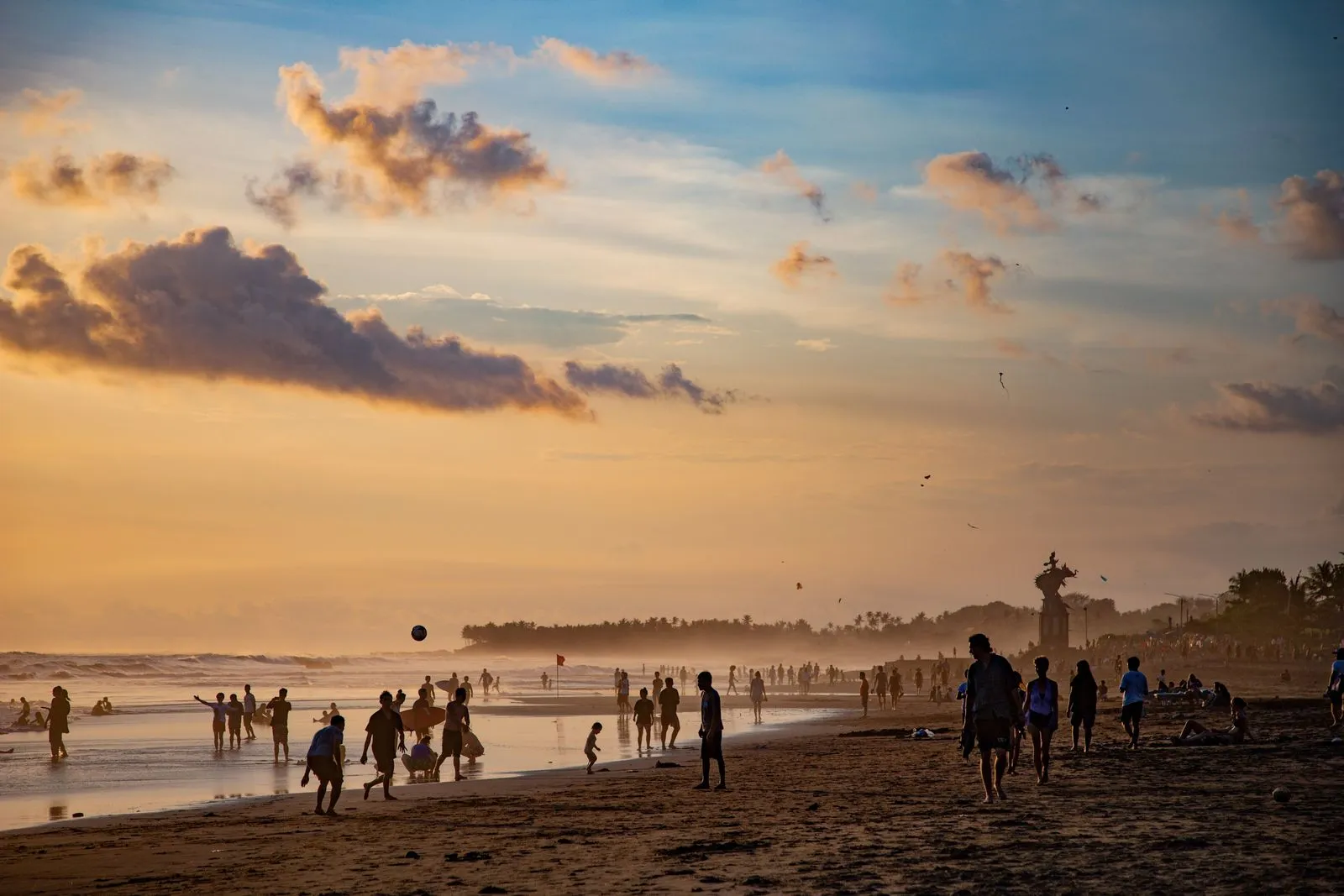
Tanah Lot is the one we would now go to at breakfast time. It opens at 07:00 and closes at 19:00. Everyone goes for sunset, which falls somewhere around 18:15–18:45, and the crowd starts building from about 16:00. The quiet hours are 07:00 to 09:00, and noon to 15:00.
Entry is about IDR 75,000 for an adult, parking IDR 5,000 for a car and 3,000 for a bike. From Canggu it is a 35–45 minute drive; from Ubud closer to an hour and a half.
The temple is better at a quiet hour than the sunset is. Want the sunset anyway, and you pay for it in time.
The kecak queue at Uluwatu
The clearest version of the pattern is on the Bukit. The temple is open 07:00–19:00, entry to the outer area about IDR 60,000 for an adult, sarong and sash included. The kecak is a separate ticket — about IDR 150,000 for an adult, 75,000 for a child aged two to nine — with two shows, at 18:00 and at 19:00.
The 18:00 show is the sunset one, so it is the one everybody wants. The gate opens around 16:00 and you need to be there by about 16:30 to get a seat you would choose. The 19:00 show is the same performance with a fraction of the queue, and no sunset. We would take the 19:00.
Getting there is the other half. From Canggu the drive is an hour and a half to two hours in good conditions, two and a half to three or more from mid-afternoon, so leaving after 14:30 for a sunset show is a gamble. Keep sunglasses and phones in a closed bag: the monkeys take them, and they are quick about it.
The drive is not the distance
Canggu to Ubud is 30 to 35 kilometres. On a map that is nothing. In practice it is 50–60 minutes between 06:00 and 07:30, 75–95 minutes from mid-morning to early afternoon, and 100–130 minutes between 16:30 and 19:30. After 21:00 it drops back to about an hour.
We ran that leg as if it were the map version, more than once, and added Bangli, the Tabanan highlands west of Ubud, Jimbaran, Sanur and Denpasar on top. Nineteen days sounds like plenty until you spread them that wide. Our rule now: move between the coast and the hills before 08:30 or after dark, and do it once rather than daily.
A private driver for a ten-hour day runs roughly IDR 650,000–900,000 at the time of writing, plus tickets, parking and a courtesy lunch. Fair value for several sights in one direction, poor value when it is really a taxi. Ride-hailing apps are blocked from picking up in central Ubud, on the Bukit and in parts of Canggu, though drop-offs are fine — which shapes a day more than the fares do.
The scooter, and the licence we should have sorted at home
A basic automatic rents for about IDR 80,000–150,000 a day, Canggu and Uluwatu at the top of that range, Ubud and Sanur at the bottom. Do not leave your physical passport as a deposit; a serious rental firm photographs it and hands it back.
The licence rule is not loosely enforced. You need your home licence with a motorcycle entitlement, an International Driving Permit, and a helmet. Checkpoints are most common around Kuta, Seminyak, Canggu and Ubud, and on public holidays. The statutory maximum for riding without a valid licence is IDR 1,000,000, and IDR 250,000 for no helmet; riders with their papers in order report a roadside settlement of about IDR 250,000. The larger cost is insurance: without the permit, a travel insurer can decline a claim.
Canggu to Ubud is not a beginner’s route, and rain turns the painted markings slippery. We ride locally and take a car for the long legs.
December rain is real, and it is not all day
December brings roughly 280–320 mm of rain across about 22 rainy days, and January is wetter again at around 340–350 mm. Those numbers frighten people off, and they should not: the pattern matters more than the total. Mornings are often clear, and the rain builds through the afternoon and evening.
So the fix is the same fix as for the crowds. Outdoor things in the morning — terraces, temples, waterfalls — and the indoor half of the day after lunch. We learned that by doing the opposite. The beaches on the south-west strip also collect washed-up rubbish in December, which nobody’s photographs show.
The levy, and the desk at arrivals
The tourist levy is IDR 150,000 per foreign visitor, once per visit. Pay it online before you fly, or at a counter in the international arrival hall, and you are sent a QR voucher. The airport desk is separate from immigration, and people without proof are sent there first.
Officers in tourism-office vests also check the voucher at the gates of some sights — Tanah Lot, Uluwatu, Tegallalang and Tirta Empul among them. If you have not paid, you pay there. Anything quoted above IDR 150,000 is a mark-up. Pay online and keep a screenshot.
Why this trip is the reason for the map
We came home having seen a great deal and remembering it badly. We knew we had liked a warung off a lane in Ubud and could not have found it again. We had been to plenty of places and could not say which deserved a second visit, or at what hour.
So we started writing it down — where, when, how long, and whether it was worth it. That record became the journal, then the guides, and eventually the map. The trips after this one went east and slower, with far less booked ahead.
This is the trip we would not sell you. It is here because the rest of the site only makes sense once you know what the map was built to fix.
Tours and tickets in Bali
Booked through GetYourGuide, who choose what appears here and pay us a commission if you book. These are not our picks and we have not checked them — our own recommendations are the places on the map. How this works